
Residential solar today is not just about putting panels on a roof; it is a layered engineering task that spans mechanics, power electronics, electrochemistry, grid integration and contract architecture. A1 SolarStore’s technical materials—SmartFlower Solar: Innovative, Sculptural Solar Energy Solution, Solar Arrays: Powered by Sunshine, Saltwater Batteries: Do They Worth Their Salt, Global Blackout 2025: Do Solar Panels Work in a Blackout?, Solar Panel Warranties: Don’t Get Burned, Free Solar Panels: Are They Really Free, Solar Leasing: Rent the Sun, Cancelling a Solar Lease Contract: Finding Ways Out and Community Solar: Shared Sunshine examine these layers not separately but as interconnected levels of a single system.
Hardware Layer: From Static Arrays to Tracking Sculptures
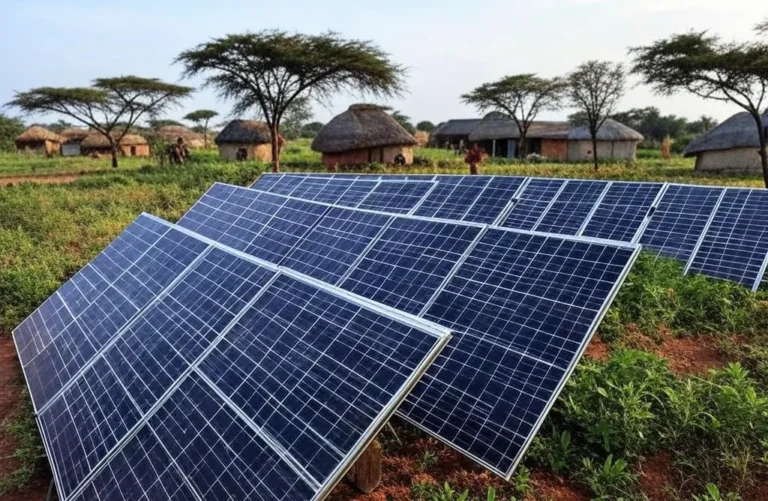
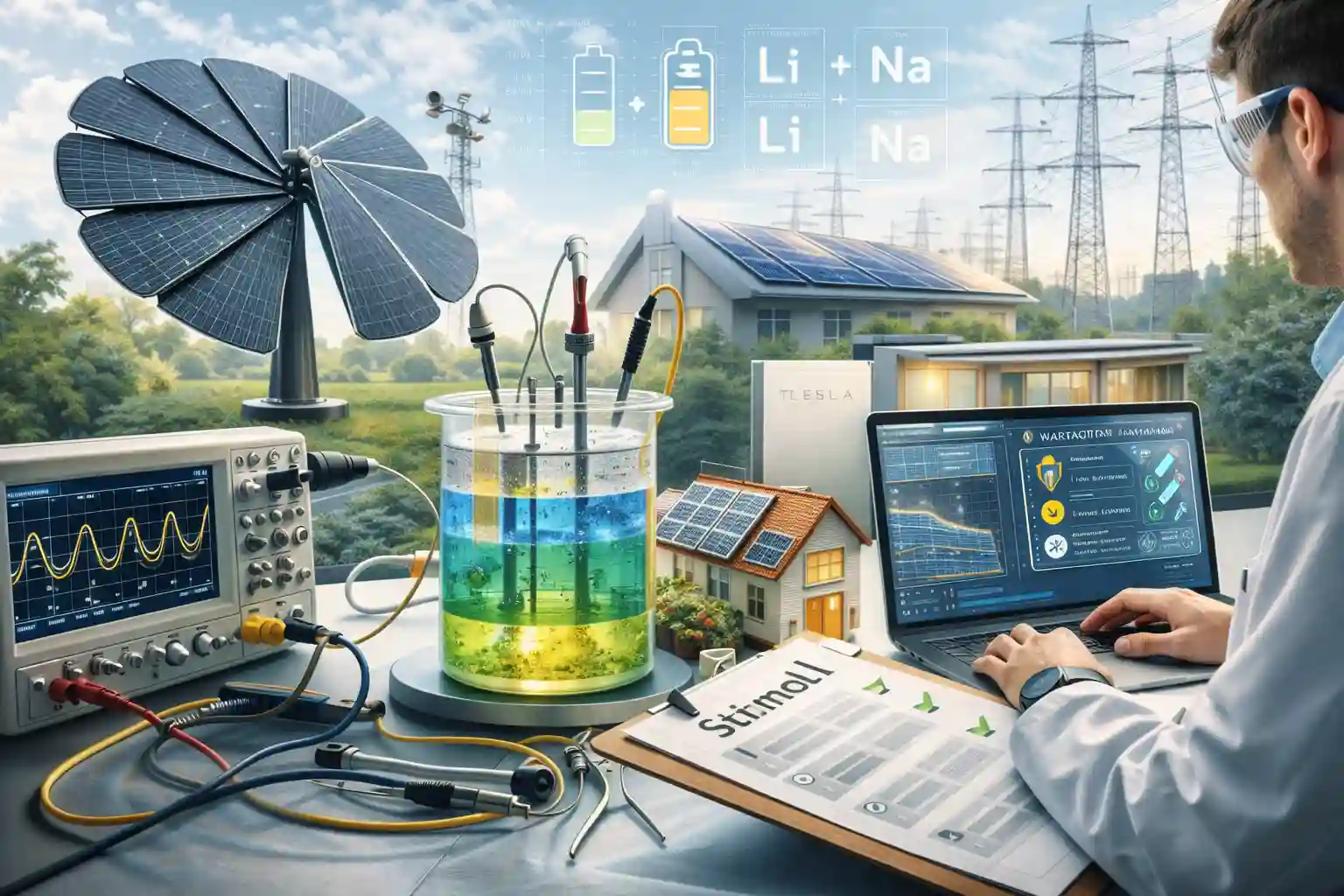
Classical static arrays serve as the reference point, thoroughly examined in Solar Arrays: Powered by Sunshine. There the system is described through basic engineering parameters: installed capacity, module interconnection schemes, mounting configurations, orientation impact and shading effects on generation profile. Against this background, SmartFlower Solar: Innovative, Sculptural Solar Energy Solution represents a mechanical experiment: dual-axis rotation, automatic petal deployment and retraction, integrated cleaning and active cooling. Dual-axis tracking delivers approximately 40% additional output compared to fixed installations of comparable peak power, but this is achieved at the cost of increased kinematic complexity, higher failure mode counts and reduced system warranty to five years versus 10-25 years for stationary solutions. From an engineering perspective, SmartFlower demonstrates the technical potential of consumer-segment tracking but does not represent an optimum on the reliability-to-cost curve.
Energy Storage: Safety Versus Density
The next layer involves storage selection, where Saltwater Batteries: Do They Worth Their Salt contrasts sodium-ion (saltwater) systems with conventional lithium-ion. Aqueous electrolyte chemistry with water-based medium and manganese cathodes virtually eliminates thermal runaway and toxic solvent usage, greatly simplifying fire safety requirements and battery monitoring systems. However, specific energy of such modules is lower, requiring approximately twice the space compared to lithium-ion cabinets for equivalent capacity. Saltwater solutions tolerate regular deep discharge without noticeable degradation acceleration, whereas for lithium full cycles reduce service life. The engineering choice thus formulates as a trade-off between energy density and safety-plus-environmental requirements, not as unambiguous superiority of one approach.
Grid Interaction: Topologies and Blackout Behavior
Grid interconnection architecture and fault behavior are analyzed in Global Blackout 2025: Do Solar Panels Work in a Blackout?. Basic grid-interactive configuration with standard inverters is described as a system strictly following anti-islanding requirements: when voltage disappears or frequency exceeds tolerances, the inverter must disconnect within seconds. This means zero backup capability during blackouts, even with excellent sunshine. For autonomy provision, hybrid schemes with batteries and automatic transfer switches are considered, along with fully off-grid standalone complexes. The hybrid variant is assessed as the most rational compromise for residential sector: selected critical loads receive power from battery and inverter while the system remains grid-connected and can exchange energy in normal mode. The price is substantial capital expenditure increase for batteries and power electronics, comparable to a separate backup power project.
Warranty Profile and Degradation
Long-term module behavior and legal formalization of system reliability are examined in Solar Panel Warranties: Don’t Get Burned. Three components are clearly separated: product warranty as physical goods, performance warranty (with specified minimum power fraction after 10-25 years) and installation workmanship warranty. Typical degradation curve reflected in terms lies in the 0.5-0.7% annual power loss range with lower threshold at 80-90% of rated output by year 25. An interesting engineering conclusion: even with identical datasheet figures, actual user risk depends heavily on manufacturer and installer stability as business entities, since responsibility for different failure types is distributed among multiple parties. For complex tracking systems like SmartFlower, shortened overall system warranty term additionally signals higher uncertainty in the mechanical domain.
Ownership Models and Distributed Generation
Finally, the legal-financial aspect transforms into another technical layer—ownership architecture and energy flow structures. Free Solar Panels: Are They Really Free and Solar Leasing: Rent the Sun show how third parties investing in equipment capture tax credits and generation revenue while leaving users with fixed or indexed payments for system use.
Cancelling a Solar Lease Contract: Finding Ways Out describes possible exit scenarios: from cooling-off period cancellation to buyouts and obligation transfers during property sales. An alternative path is virtual generation in community-solar format, examined in Community Solar: Shared Sunshine: physically the array is located at a shared site while consumers receive billing credits proportional to their share. From an engineering standpoint this becomes a distributed generation optimization and billing task, not just single-roof design.With this reorientation of emphasis, A1 SolarStore content transforms into a coherent engineering roadmap: first hardware architecture is selected (static versus tracking, storage type, grid connection topology), then fault behavior and degradation requirements are overlaid, and only finally is ownership model and contract structure fitted to this technical configuration.