
Batteries for a 12 V Siemens solar system
Size the battery from your daily load and the autonomy you want. The chemistry then decides how much nameplate capacity you need: about 1.8 times more in lead-acid than in LiFePO4.
Key takeaways
- Nameplate energy = daily Wh × days ÷ (usable fraction × 0.85). Lead-acid is only about 50 % usable, LiFePO4 about 90 %.
- For a 300 Wh daily load over two days: 1.41 kWh (118 Ah) in lead-acid against 0.78 kWh (65 Ah) in LiFePO4.
- Lead-acid needs about 14.4 V for hours on a 12 V system; check the headroom of 30-cell modules (SM20, SM46).
- Do not charge lithium below 0 °C without heating or a low-temperature cutoff.
Most Siemens modules were designed for stand-alone systems that charge a battery. The installation notes give battery capacity, from 100 to 290 Ah in the vehicle and boat notes and a 4,000 Ah bank at El Negrito, but name the chemistry only once: 2 V lead-calcium cells in the farmhouse note. Systems of that period would normally have used lead-acid. If you are restoring such a system, the battery is the part most likely to need replacing, and the part where today’s options differ most.
Size from your load, not your panels
Daily watt-hours × days of autonomy ÷ (usable fraction × 0.85) gives the nameplate energy. Divide by the system voltage for amp-hours. The 0.85 stands for round-trip efficiency. The calculator does the arithmetic; these three examples show how far the chemistry moves the answer.
| Load | Lead-acid (50 % usable) | LiFePO4 (90 % usable) |
|---|---|---|
| Telemetry: 50 Wh a day, 5 days of autonomy | 0.59 kWh, about 49 Ah at 12 V | 0.33 kWh, about 27 Ah at 12 V |
| Lighting and electronics: 300 Wh a day, 2 days | 1.41 kWh, about 118 Ah | 0.78 kWh, about 65 Ah |
| Camper with fridge: 800 Wh a day, 1 day | 1.88 kWh, about 157 Ah | 1.05 kWh, about 87 Ah |
The El Negrito bank in the telecom notes is about ten days of its load, much more autonomy than a weekend system needs. Autonomy is a judgement about how many sunless days you can accept, not a formula.
Lead-acid or LiFePO4?
| Lead-acid (flooded, AGM, gel) | LiFePO4 | |
|---|---|---|
| Usable capacity | About 50 % | 80 to 100 % |
| Cycle life | Hundreds of cycles | Thousands of cycles |
| Charging | Needs about 14.4 V absorption on 12 V for hours; temperature compensation | 14.2 to 14.6 V absorption, brief; no equalisation; no charging below 0 °C |
| Weight | Heavy | About one third as heavy |
| Fits a Siemens system? | Yes: the systems were designed for it | Yes, if the controller has a lithium profile or can be set manually |
Charging headroom matters most with lead-acid
Lead-acid needs to sit near 14.4 V for hours to avoid sulphation, and a deficit of even a volt on hot days shows up as a battery that never fully charges. A lithium battery reaches nearly full charge at lower absorption voltage and tolerates partial charge, so it is more forgiving of a module with little headroom. The 30-cell SM20 and SM46 are the modules to check first: see the headroom row on their pages.
Cold sites need a plan
A lithium battery must not be charged below freezing unless it has built-in heating or a low-temperature cutoff, and many remote Siemens installations were exactly the sort of high, cold site (the Andes repeater ran at −20 °C). Lead-acid accepts charge in the cold but loses capacity as it chills. In a cold climate, insulate or bury the battery enclosure whichever chemistry you choose.
Questions readers ask
How many amp-hours do I need for a 55 W module?
The module does not decide the battery; your load does. A 55 W module gives roughly 165 to 205 Wh a day, so a system that uses that much with two days of autonomy needs about 118 Ah in lead-acid or 65 Ah in LiFePO4.
Can I mix a new lithium battery with the old lead-acid bank?
No. Different chemistries need different charge profiles; replace the bank as a whole and set the controller for the new battery.
Is a bigger battery always better?
No. A bank much larger than the array can recharge never reaches full charge and sulphates if it is lead-acid. Match the battery to the array’s daily yield.
What did the installations in Siemens’ notes use?
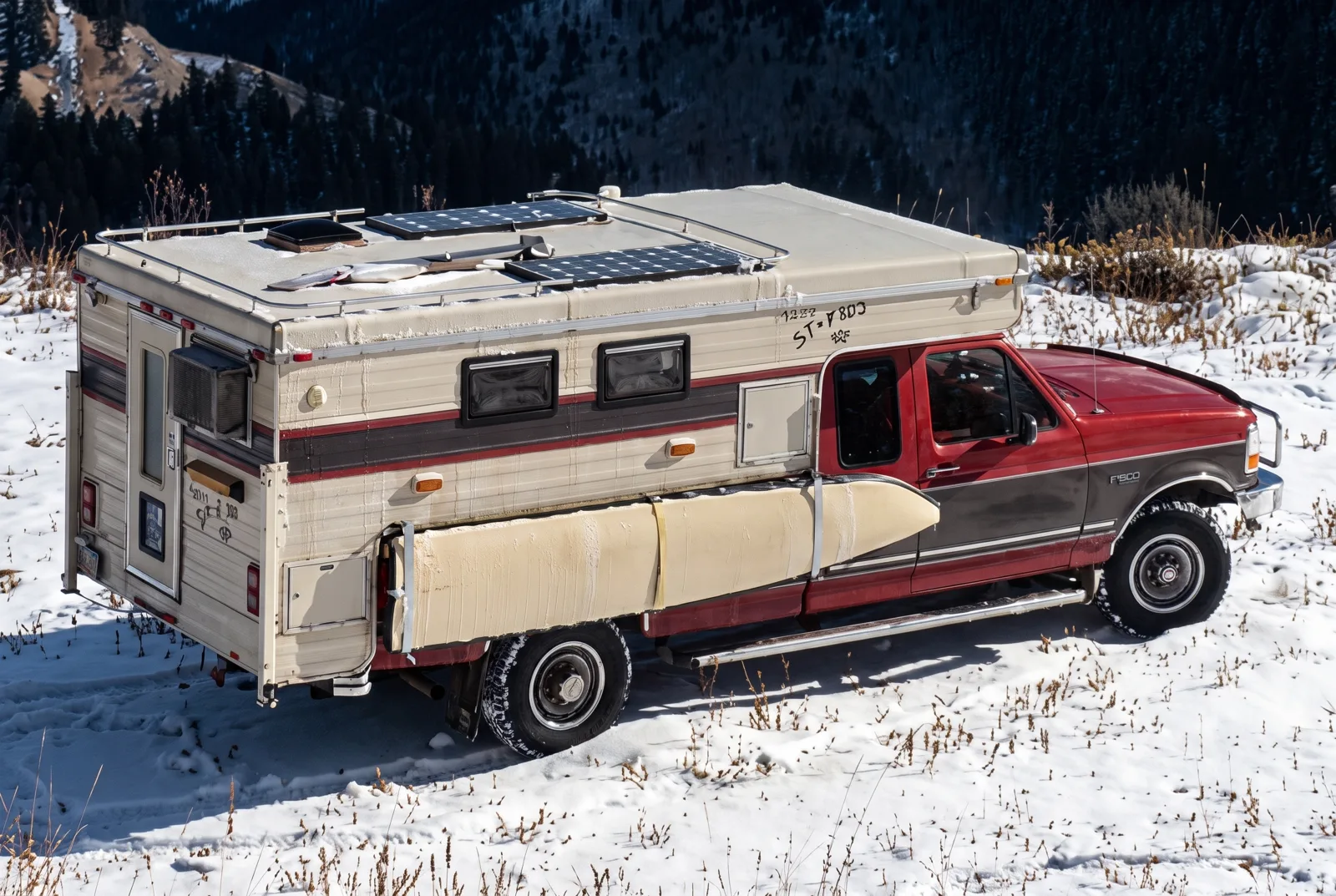
The notes give capacities, such as 2 × 290 Ah in the Wyoming camper, 2 × 100 Ah on the Pacific sailboat and 4,000 Ah at the Andes repeater, but name the chemistry only for the farmhouse (2 V lead-calcium cells).
Do I still need a charge controller with a lithium battery?
Yes, with a lithium profile. It prevents overcharge and, if it has a temperature cutoff, protects the battery in the cold.
Related guides
Charge controllers for Siemens solar modules
How to choose a charge controller for Siemens modules: PWM or MPPT, why 36 cells suit 12 V batteries, cold-weather Voc limits and how to size the current.
Read more →Wiring Siemens solar modules: series, parallel and bypass diodes
Wiring rules from the Siemens datasheets: maximum system voltage by model, series and parallel strings, cold-weather Voc, 6 V versions and bypass diodes.
Read more →Siemens Solar in telecom: six installations
Six Siemens Solar telecom installations, from a 4,200 m Andes repeater to Mexico’s rural network, with component lists and sanity checks.
Read more →Enter your load and autonomy and get kWh and amp-hours for lead-acid or LiFePO4.