
Typical Siemens solar system diagrams
Siemens described four system layouts: directly connected, stand-alone, generator hybrid and utility-interactive. Here are the block diagrams and what each is used for.
Key takeaways
- A directly connected system has no battery: the load runs only while the sun shines, which suits pumps and fans.
- A stand-alone system adds a charge regulator and a battery; most remote telecom, boat and RV systems are this layout.
- A hybrid adds a generator so power is available in any season.
- Grid-interactive systems stop during an outage unless they use a special bi-directional inverter.
Siemens Solar’s own system-diagram page distinguished four layouts. They are still the four layouts in use, and they explain where a module such as the SM55 or SP75 fits. The diagrams below are redrawn from the originals; the characteristics and typical applications are the page’s own wording, shortened.
Directly connected
No battery. The load runs only when the sun shines, with peak operation on summer middays. A special inverter can add AC power, a soft start and protection circuits. Typical uses: ventilation fans and water pumping. Pumping suits this layout because the tank is the storage.
Stand-alone, DC loads
Stand-alone, with an inverter for AC loads
Battery storage allows operation at night and in bad weather. The charge regulator prevents overcharging and over-discharging, and system controls can add circuit protection and remote monitoring. Typical uses: telecommunications and telemetry, traffic signalling and monitoring, outdoor lighting, RV and boat power, lanterns, and remote homes, clinics and schools. The case files on telecom and RV and marine installations are this layout.
PV-generator hybrid
A generator plus rectifier charges the battery so that energy is available in any climate in any season; the generator can burn gasoline, propane or diesel. With an AC bus the generator feeds the loads directly through a transfer switch while also recharging the battery. With a DC bus everything flows through the battery, which avoids transfer switching and glitches in the AC supply. Typical uses: large telecom stations, village power and RVs with generators.
Utility-interactive
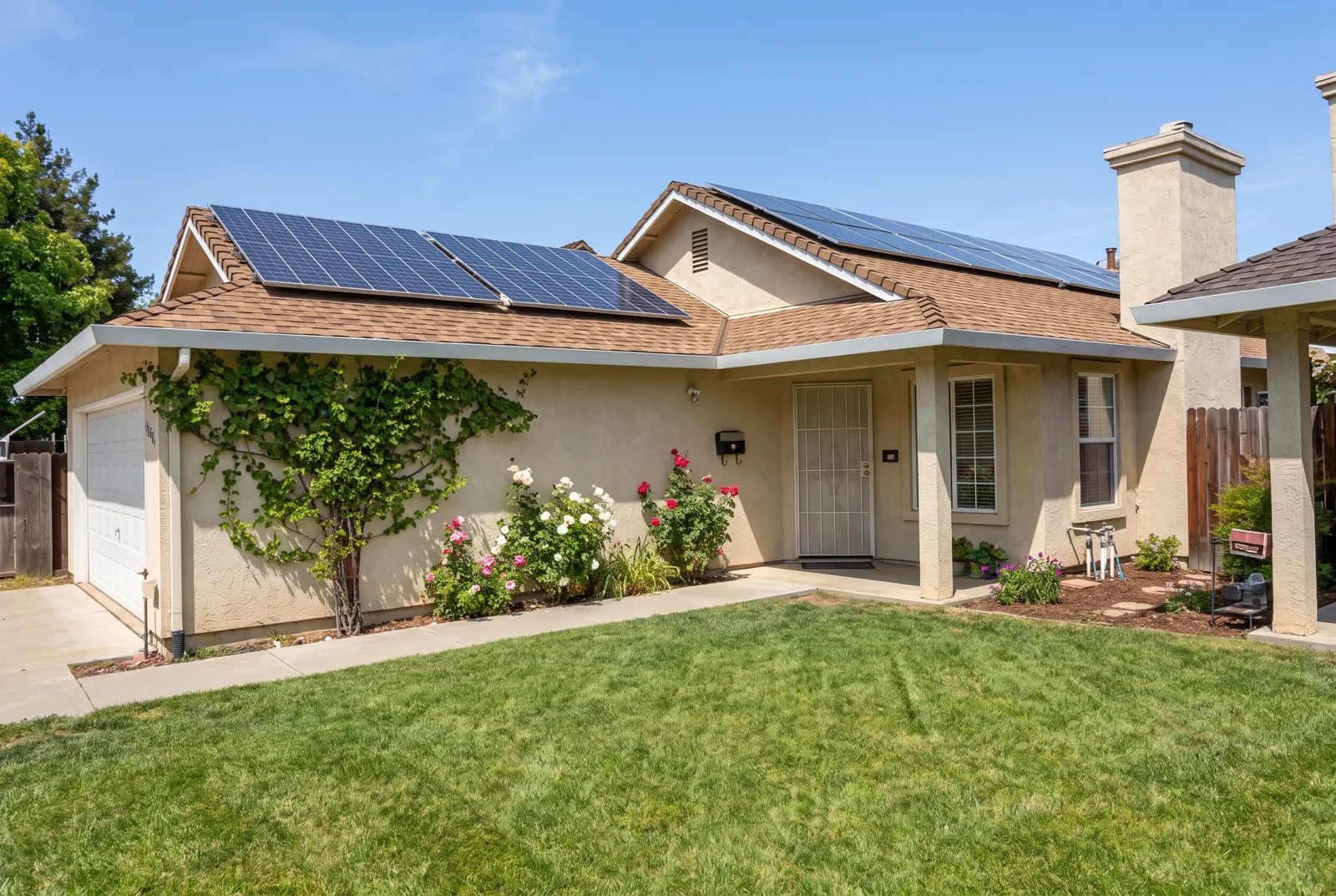
Unused daytime energy goes into the grid and earns the owner a credit. Large grid-support systems (100 to 500 kW) and many distributed home systems send power through an inverter to the grid and run only while grid power is present, so they stop during outages. A utility-independent variant uses a special bi-directional inverter that powers dedicated circuits even during an outage. Typical uses: urban homes and businesses, utility grid support, building-integrated systems. See the utility and architectural case files.
Questions readers ask
Which layout needs a battery?
Stand-alone and hybrid systems. Directly connected and basic grid-tied systems do not store energy.
Why does a grid-tied system shut down in a blackout?
Siemens’ own description says it operates only while grid power is present; a utility-independent variant needs a special bi-directional inverter to power dedicated circuits.
Where do I read the details of the stand-alone case?
The telecom and RV and marine case files are stand-alone systems with component lists.
Related guides
Siemens Solar in telecom: six installations
Six Siemens Solar telecom installations, from a 4,200 m Andes repeater to Mexico’s rural network, with component lists and sanity checks.
Read more →Batteries for a 12 V Siemens solar system
Which battery to pair with Siemens modules: lead-acid versus LiFePO4, how to size from the daily load, worked examples and what the installation notes recorded.
Read more →Charge controllers for Siemens solar modules
How to choose a charge controller for Siemens modules: PWM or MPPT, why 36 cells suit 12 V batteries, cold-weather Voc limits and how to size the current.
Read more →Enter your modules and load in the calculator.