
Siemens Solar for gas wells and water pumping: installations
Gas-well telemetry in Texas, 330 water pumping stations in the Sahel and drinking water on the Amazon, with component lists from Siemens’ notes.
Key takeaways
- Two to four 100 Ah batteries and one or two modules ran a remote terminal unit at a South Texas gas well; the customer reported payback under three years.
- At Stratton Field, 440 remote monitors on solar power cut well downtime by 50 %.
- The Sahel programme: 540 kWp across 330 water pumping stations, 240 community lighting systems, 63 refrigeration services and 36 battery-charging stations.
- A directly coupled pump needs no battery: the tank is the storage.
Two of Siemens’ application groups share a feature: the load is small, constant and far from the grid. In a gas field the load is a remote terminal unit; in a village it is a pump. The gas and oil page lists the SM6, SM10, SM50, SM55, SP18 and SP65/70/75; the water page lists the same without the SP18.
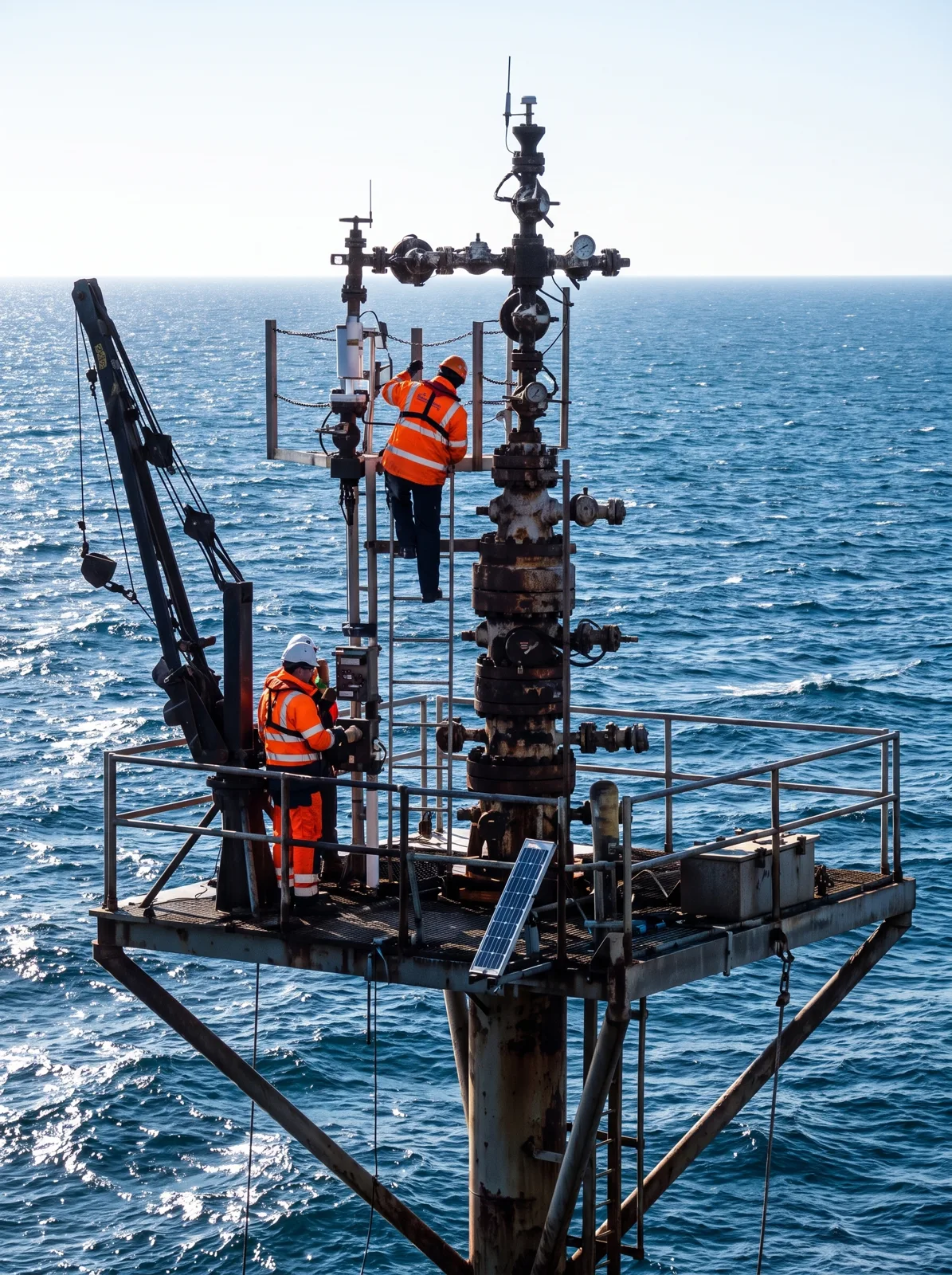
Gas well-head automation, South Texas
| Installed by | Union Pacific Resources Company |
|---|---|
| Climate | Semi-arid, humid, hot, tropical storms and occasional hurricanes |
| Purpose | Real-time data acquisition and communications at natural-gas well heads |
System components as published:
- 2 × M55 modules
- 2 to 4 × 100 Ah batteries
- 1 battery charge controller
- 1 Siemens SIMATIC 8635 remote terminal unit in a NEMA enclosure
- 1 modem and radio transmitter/receiver
Our arithmetic:
- Two M55 modules at about 53 to 55 W each give 106 to 110 W. At 4 peak-sun-hours and 0.75 efficiency that is roughly 320 Wh per day for an RTU, modem and radio: a very small load by design.
The customer’s reported result: savings in manpower costs, better production and less well downtime, with payback for the automation under three years.
Stratton Field, near Alice, Texas
| Installed by | Hutton Communications, Dallas, for Union Pacific Resources |
|---|---|
| Scale | 440 remote terminal gas-production monitors |
System components as published:
- Siemens SIMATIC 8635 RTU, modem, transmitter/receiver, Siemens M55 module at each station
Our arithmetic:
- The South Texas note lists two M55 modules per well, while the Stratton note lists one module per station. At one to two modules each, 440 stations would carry roughly 24 to 48 kW of modules in total, each unit independent of the others.
The note reports a 50 % reduction in well downtime and increased productivity.
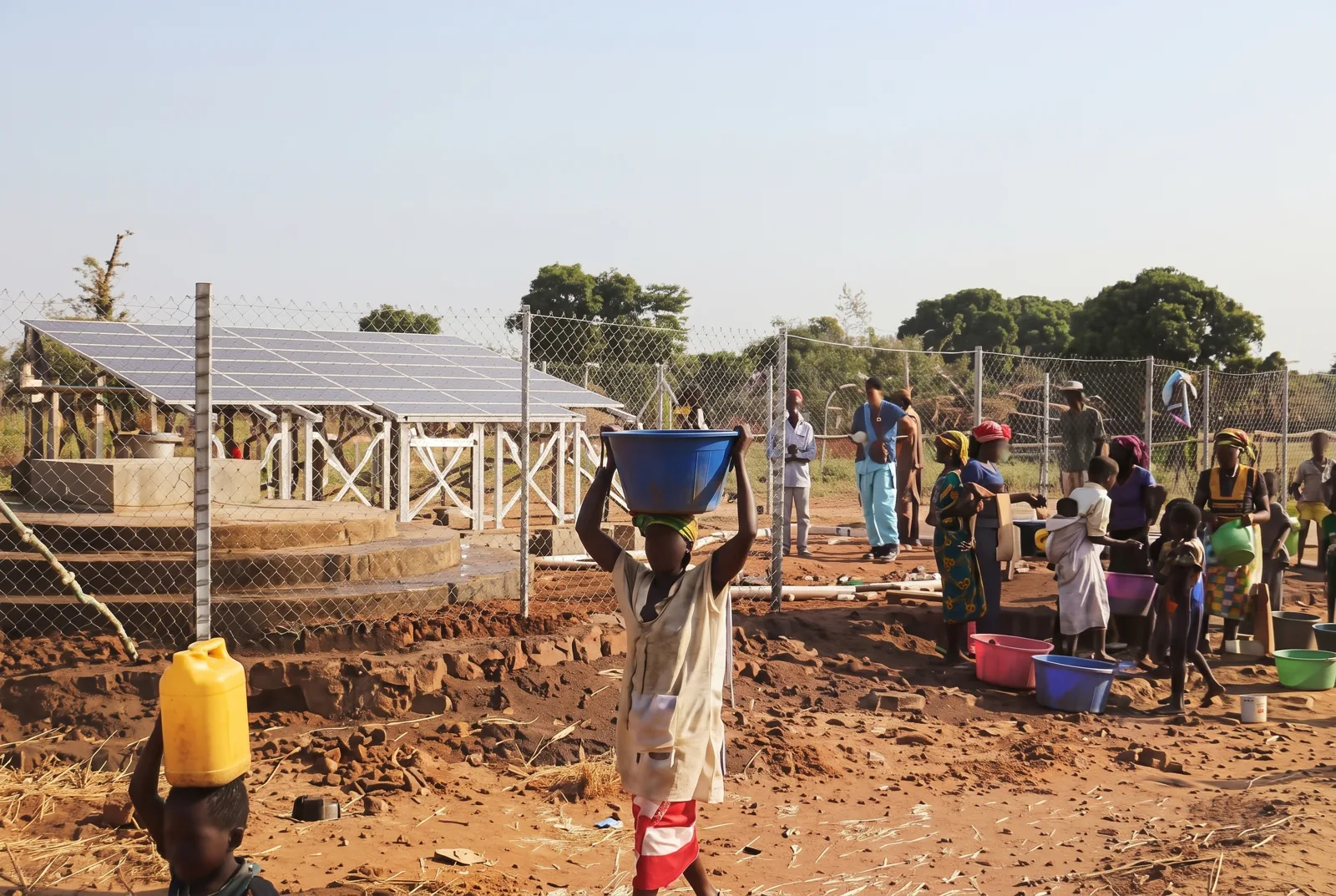
Regional Solar Programme (PRS), Sahel
| Countries | Cape Verde, Gambia, Guinea-Bissau, Mauritania, Senegal |
|---|---|
| Partners | Comité Inter-États de Lutte contre la Sécheresse dans le Sahel (CILSS) and Siemens Solar GmbH |
| Scale | 540 kWp for 330 water pumping stations, 240 community lighting systems, 63 refrigeration services and 36 battery recharging stations; described as the most ambitious PV programme undertaken by the European Union |
System components as published:
- Larger pumping systems: Siemens M50 modules, Grundfos and KSB centrifugal pumps, 3.5 kVA Simovert-P-Solar inverters
- Smaller pumping stations: components not listed in the note
Our arithmetic:
- The note’s headline reads ‘one million users rely on PV solar conversion’. At 540 kWp over the 669 installations listed, the average is about 0.8 kWp each; the note does not split the capacity by type, so the average says little about pump size.
Village involvement and organisation are credited with keeping the installations maintained.
Drinking water on the Araguaia River, Brazil
| Installed by | Dr. Otto Austel, Rotary International |
|---|---|
| Community | Karajá people |
System components as published:
- Siemens solar modules powering pumping stations (no component list in the note)
The note reports clean drinking water reducing illness in the settlements, improved sanitation and crop irrigation.
Why direct coupling to a pump works
The water-delivery page says the modules can be coupled directly to pumps for maximum reliability and minimum maintenance, replacing troublesome diesel engines and wind pumps. A directly connected system (first diagram on the system diagrams page) has no battery to maintain: the tank is the storage, and the pump runs hardest when the sun is highest, which is when evaporation and demand peak.
Questions readers ask
Which Siemens modules were used in these installations?
The notes name M55 modules for the Texas wells and M50 modules for the Sahel pumps.
Why pump directly from the array?
Siemens’ water page says direct coupling gives maximum reliability and minimum maintenance, replacing diesel engines and wind pumps.
What inverters drove the Sahel pumps?
3.5 kVA Simovert-P-Solar inverters with Grundfos and KSB centrifugal pumps.
Related guides
Siemens solar-ready panels and Simovert inverters: what the sources show
What “Siemens solar” can mean besides modules: solar-ready electrical panels with the 120% rule, and the Simovert pump inverters.
Read more →Typical Siemens solar system diagrams
Block diagrams of four PV system types from Siemens Solar’s original system page: directly connected, stand-alone, generator hybrid and grid-interactive.
Read more →Siemens Solar in telecom: six installations
Six Siemens Solar telecom installations, from a 4,200 m Andes repeater to Mexico’s rural network, with component lists and sanity checks.
Read more →The calculator uses the same arithmetic as the case files.