
Michigan gets about 1.5 to 2.0 peak sun hours a day in December and about 5.4 to 5.5 in July on a south-facing panel tilted at the site’s latitude. These are NASA POWER averages for 2001–2025 at Detroit, the Traverse City area and Marquette (NASA POWER, Detroit). A small Siemens system in Michigan therefore has to be sized for December, when one SM55 module puts at most 4.7 to 6.3 amp-hours a day into a 12 V battery.
Updated: November 2026
The annual averages in Table 1 (3.82 to 4.09 kWh/m²/day) come to about 4 sun hours, but that figure hides the seasonal swing. July delivers 2.7 times the December figure in Detroit and 3.7 times in the Traverse City area. This page lists the monthly values for three locations, what tilt adds in December, the daily charge from one SM55, and the module’s open-circuit voltage at the state’s record low.
Michigan peak sun hours by month: Detroit, Traverse City area and Marquette
Table 1 gives NASA POWER’s monthly averages for a south-facing panel tilted at each site’s latitude. One kWh/m²/day equals one peak sun hour, so each value reads directly as sun hours per day.
Table 1. Peak sun hours per day at latitude tilt (kWh/m²/day), 2001–2025 average
| Month | Detroit (42.33° N, 83.05° W) | Traverse City area (44.76° N, 85.62° W) | Marquette, Upper Peninsula (46.54° N, 87.40° W) |
|---|---|---|---|
| January | 2.48 | 1.85 | 2.02 |
| February | 3.37 | 2.90 | 2.93 |
| March | 4.19 | 4.23 | 4.08 |
| April | 4.72 | 4.68 | 4.65 |
| May | 4.94 | 5.14 | 5.08 |
| June | 5.32 | 5.37 | 5.24 |
| July | 5.49 | 5.53 | 5.42 |
| August | 5.18 | 5.16 | 5.05 |
| September | 4.85 | 4.74 | 4.40 |
| October | 3.74 | 3.24 | 3.15 |
| November | 2.80 | 2.20 | 2.10 |
| December | 2.01 | 1.49 | 1.74 |
| Annual | 4.09 | 3.88 | 3.82 |
Source: NASA POWER Climatology API v2.10.2, Renewable Energy community, point queries for Detroit, the Traverse City area and Marquette, period January 2001 to December 2025, retrieved November 21, 2026.
Northern Michigan is darker than Detroit in winter, but the Upper Peninsula point is not the darkest of the three. The Traverse City area has the lowest December (1.49) and January (1.85) values. Marquette, 1.8 degrees of latitude farther north, has 1.74 and 2.02. From March through August the three sites stay within 0.20 sun hours of each other, so the differences between them matter from September through February.
The NOAA/NCICS Michigan climate summary notes that the eastern shore of Lake Michigan and the south shore of Lake Superior get much more snow than the rest of the state (NCICS). The sources used here do not show whether lake-effect cloud explains the low December value at the Traverse City point.
What tilt angle to use for solar panels in Michigan in winter
In December a flat panel in Michigan collects 0.93 to 1.26 peak sun hours a day. Tilting it to the site’s latitude raises that by 55 percent in the Traverse City area, 60 percent in Detroit and 87 percent in Marquette. Going steeper still, to latitude plus 15°, adds another 3 to 5 percent and comes within 0.01 kWh/m²/day of NASA POWER’s optimal December value at all three points.
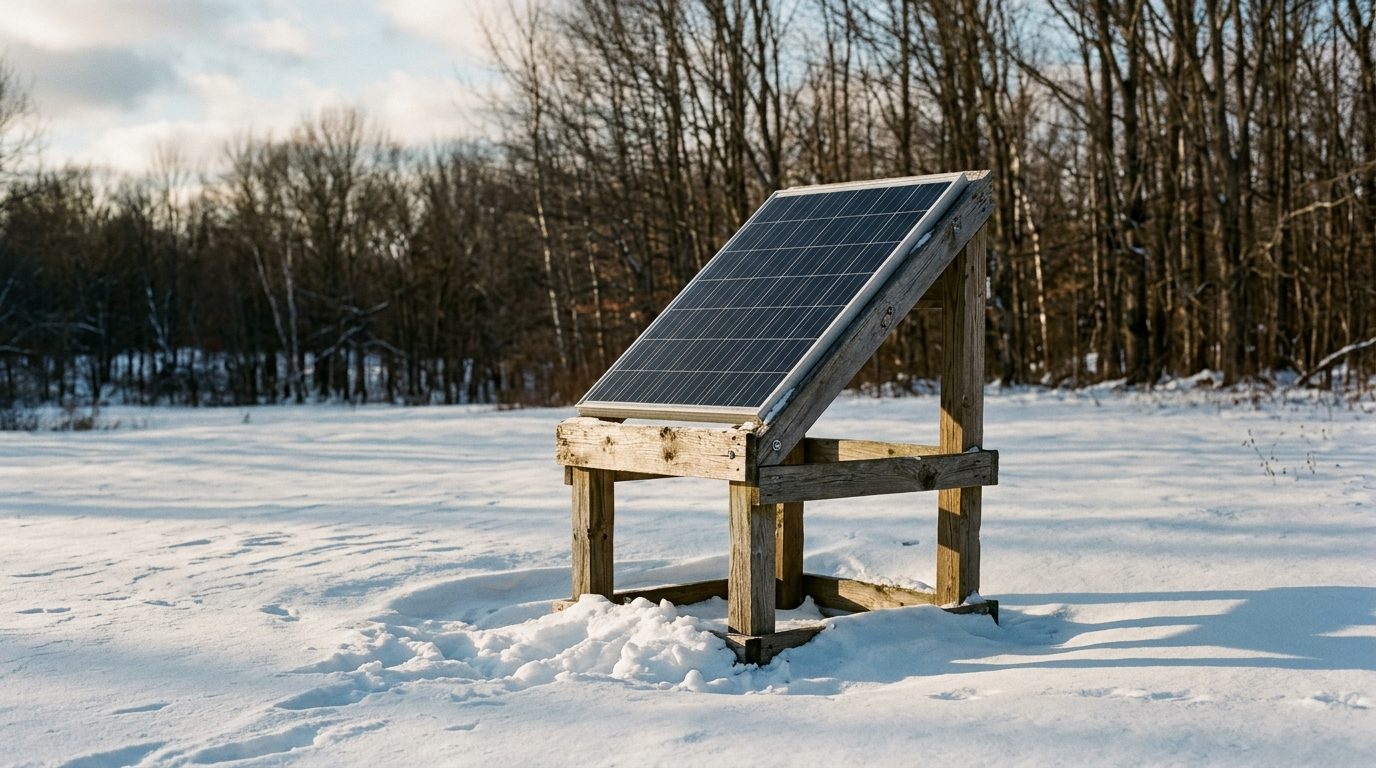
Table 2. December peak sun hours by panel tilt (kWh/m²/day)
| Tilt | Detroit | Traverse City area | Marquette |
|---|---|---|---|
| Horizontal (flat) | 1.26 | 0.96 | 0.93 |
| Latitude − 15° | 1.83 | not retrieved | not retrieved |
| Latitude (about 42°, 45°, 47°) | 2.01 | 1.49 | 1.74 |
| Latitude + 15° (about 57°, 60°, 62°) | 2.10 | 1.53 | 1.82 |
| Vertical (90°) | 1.93 | not retrieved | 1.69 |
| NASA optimal angle for December | 2.11 | 1.53 | 1.82 |
Table 3. Optimal tilt angle from NASA POWER (degrees from horizontal)
| Period | Detroit | Traverse City area | Marquette |
|---|---|---|---|
| December | 62° | 60.5° | 66° |
| January | 61.5° | not retrieved | not retrieved |
| June | 7° | not retrieved | not retrieved |
| Whole year (fixed mount) | 29.5° | 28.5° | 31° |
Source for Tables 2 and 3: the same three NASA POWER queries as Table 1, retrieved November 21, 2026.
For a system sized to December, latitude plus 15° (57° to 62°) is the winter setting the data supports, because it matches the December optimum to within 0.01 kWh/m²/day at all three points. A fixed mount at latitude gives up 0.04 to 0.10 kWh/m²/day in December, or 3 to 5 percent. The annual optimum of 28.5° to 31° favors summer. In Detroit, latitude minus 15° (about 27°), the tabulated tilt closest to that angle, gives 1.83 in December, 9 percent below latitude tilt.
A vertical mount gives up little in December: 1.93 in Detroit and 1.69 in Marquette, 3 to 4 percent below latitude tilt.
These values measure sunlight reaching the tilted surface. They do not include losses from snow lying on the module.
How many amp-hours one Siemens SM55 puts into a 12 V battery in Michigan
The Siemens SM55 is a 36-cell monocrystalline module rated at 55 W. Its datasheet values at standard test conditions (STC: 1000 W/m², 25°C cell temperature), as reproduced in a 2019 peer-reviewed paper, are below (Chaibi et al., Data in Brief).
Table 4. Siemens SM55 at STC (datasheet)
| Model | Pmax (W) | Vmp (V) | Imp (A) | Voc (V) | Isc (A) |
|---|---|---|---|---|---|
| Siemens SM55 | 55 | 17.4 | 3.15 | 21.7 | 3.45 |
Temperature coefficients from the same source: current +0.04 %/K, voltage −0.35 %/K. The full SM55 and SM50 specifications are on the SM55/SM50 spec sheet.
With a PWM charge controller, the battery receives about the module’s own current. Daily charge is therefore estimated as Imp (3.15 A) multiplied by the peak sun hours in Table 1 or Table 2.
Table 5. Upper-bound daily charge from one SM55 into a 12 V battery (Ah/day)
| Location | December, latitude tilt | December, latitude + 15° | January, latitude tilt | July, latitude tilt |
|---|---|---|---|---|
| Detroit | 6.3 | 6.6 | 7.8 | 17.3 |
| Traverse City area | 4.7 | 4.8 | 5.8 | 17.4 |
| Marquette | 5.5 | 5.7 | 6.4 | 17.1 |
Example: Detroit in December, 3.15 A × 2.01 h = 6.3 Ah. Calculated November 21, 2026 from NASA POWER and Chaibi et al. 2019.
The figures assume:
- the module delivers its datasheet Imp of 3.15 A for every peak sun hour;
- a PWM controller;
- no losses from wiring, soiling, snow cover or battery charging;
- the module performs to its original rating. An aged SM55 may deliver less, and how much less can only be found by measuring that module.
Each value is therefore an upper bound. Real daily charge will be lower by an amount these sources do not quantify.
How many SM55 modules a small Michigan cabin needs in December. For a cabin load of 20 Ah per day in the Traverse City area, 20 ÷ 4.69 = 4.3, which rounds up to 5 SM55 modules before battery and wiring losses. In Detroit the same load needs 20 ÷ 6.33 = 3.2, so 4 modules, and in Marquette 20 ÷ 5.48 = 3.6, so 4 modules. The five-module Traverse City array would deliver up to about 87 Ah a day in July. Other loads and battery sizes can be worked through with the Siemens solar calculator and the December values from Table 1.
SM55 open-circuit voltage in a Michigan cold snap
An SM55’s open-circuit voltage rises as the cells get colder. Michigan’s record low is −51°F (−46°C), measured at Vanderbilt in the northern Lower Peninsula on February 9, 1934 (CBS News Detroit, citing NOAA). At that temperature the SM55’s Voc works out to about 27.1 V per module, or 54.2 V for two in series.
Table 6. SM55 open-circuit voltage by cell temperature
| Cell temperature | Voc, one SM55 (V) | Voc, two in series (V) | Basis |
|---|---|---|---|
| 60°C (140°F) | 19.1 | 38.2 | Chaibi et al., simulation from datasheet curves |
| 25°C (77°F), STC | 21.7 | 43.4 | Datasheet |
| 20°C (68°F) | 22.16 | 44.32 | Chaibi et al., simulation from datasheet curves |
| −18°C (0°F) | 24.9 | 49.9 | Calculated, coefficient −0.35 %/K |
| −46°C (−51°F), Michigan record | 27.1 | 54.2 | Calculated, coefficient −0.35 %/K |
The calculation for the record low: 25°C − (−46°C) = 71 K. Voc = 21.7 V × (1 + 0.0035 × 71) = 21.7 × 1.2485 ≈ 27.1 V. The 0°F row uses the same method with a 42.8 K difference. Both rows assume the cell temperature equals the air temperature at first light, before sunlight warms the module (derived from Chaibi et al. 2019 and the NOAA record).
The two cold rows extend the datasheet coefficient in a straight line far below room temperature, so they are estimates. No measured value at these temperatures appears in surviving documents. At 20°C, the straight-line coefficient gives 22.08 V and the paper’s simulation gives 22.16 V, a 0.08 V difference.
These voltages matter when choosing a charge controller. The controller’s maximum input voltage has to stay above the array’s Voc on the coldest morning, which is higher than the 21.7 V on the label. On a 12 V system with one SM55, the input limit has to cover about 27.1 V. On a 24 V system with two in series, it has to cover about 54.2 V. Controller types and their limits are covered on the charge controllers for Siemens modules page.
Michigan winter conditions that affect a small array: cold, snow and short days
Solar panels work in Michigan’s snow and cold. Cold raises a module’s voltage and power output. Short, cloudy days and snow lying on the module are what reduce winter output.

Table 7. Michigan winter conditions
| Condition | Value | Period | Source |
|---|---|---|---|
| Long-term winter average temperature | 20.7°F | 1895–96 to 2023–24 | NOAA/NCICS |
| Recent winter average | 25.9°F, highest on record | 2020–2024 | NOAA/NCICS |
| Very cold nights (minimum 0°F or lower) | 11.5 per year, state average | long-term | NOAA/NCICS |
| Annual snowfall, parts of the Upper Peninsula | more than 200 in | 1991–2020 average | NOAA/NCICS |
| Record low temperature | −51°F, Vanderbilt | February 9, 1934 | CBS News Detroit, citing NOAA |
Consumers Energy, the Michigan utility, states that “colder temperatures enhance production efficiency, meaning a chilly and sunny winter day is optimal for solar energy,” and that “snow on the ground reflects light onto the back of the modules to produce power” (Consumers Energy).
The SM55’s datasheet-derived figures show the same temperature effect. At 1000 W/m², Pmax is 56.54 W at 20°C and 46.01 W at 60°C (Chaibi et al.). Dim light lowers output much more. At 25°C, Pmax falls from 55.07 W at 1000 W/m² to 9.88 W at 200 W/m². These values come from MATLAB simulation of digitized datasheet curves and do not describe a particular aged module.
Adding modern panels to an old Siemens array in Michigan
Current panels of 355 to 410 W have open-circuit voltages of 37.23 to 46.8 V, well above the SM55’s 21.7 V. Where matched SM55 modules cannot be found, A1 SolarStore lists current panels in Michigan with prices. On November 21, 2026, a Canadian Solar 355 W (CS3U-355PB-AG, Voc 46.8 V) was listed at $107.24 and a JA Solar 405 W (JAM54S31-405/MR, Voc 37.23 V) at $146.81. At those voltages they need their own MPPT controller and cannot share a 12 V PWM string with SM55s. Their temperature coefficients are not on the cited page, so this page gives no cold-weather Voc for them. Matching or replacing an SM55 is covered in detail on the SM55 replacement and expansion page.
Questions about solar in Michigan winters
Do solar panels work in a Michigan winter?
Yes. Cold raises module voltage and power, and Consumers Energy describes a cold, sunny winter day as optimal for solar. Daylight is what limits winter output. In December a flat panel collects 0.93 to 1.26 peak sun hours a day and a panel at latitude tilt collects 1.49 to 2.01 (NASA POWER, 2001–2025).
What is Michigan’s worst month for solar?
December is the lowest month at all three locations: 2.01 peak sun hours in Detroit, 1.49 in the Traverse City area and 1.74 in Marquette at latitude tilt. January is second lowest at each site.
What tilt angle should solar panels have in Michigan in winter?
About latitude plus 15°, or 57° to 62° from horizontal. NASA POWER’s optimal December angle is 62° for Detroit, 60.5° for the Traverse City area and 66° for Marquette. A fixed mount at latitude gives up 3 to 5 percent in December.
Is the Upper Peninsula too dark for solar?
By the NASA POWER averages, no. Marquette averages 1.74 peak sun hours in December, more than the Traverse City area’s 1.49, and 3.82 for the year against Detroit’s 4.09. Parts of the Upper Peninsula receive more than 200 inches of snow a year, and the sources used here do not quantify how much snow cover reduces module output.
Sources and open questions
Sources:
- NASA POWER Climatology API v2.10.2, Renewable Energy community, 2001–2025 climatology, retrieved November 21, 2026: Detroit, 42.33 N, 83.05 W; Traverse City area, 44.76 N, 85.62 W; Marquette, 46.54 N, 87.40 W.
- Chaibi et al., “Data on the I–V characteristics related to the SM55 monocrystalline PV module at various solar irradiance and temperatures,” Data in Brief 26, 104527, published September 16, 2019 (PMC).
- NOAA/NCICS State Climate Summaries, Michigan, 2025 edition published 2026 (statesummaries.ncics.org).
- CBS News Detroit, “Michigan’s coldest temperature on record hit on Feb. 9, 1934,” citing NOAA, February 9, 2026 (cbsnews.com).
- Consumers Energy, “Solar in Winter – Better than You May Think,” undated, seen November 21, 2026 (consumersenergy.com).
- A1 SolarStore, Michigan solar panels page, prices seen November 21, 2026 (linked in the section on modern panels).
- Amp-hour and cold-voltage figures: calculated for this page on November 21, 2026 from the sources above.
Open questions:
- Tilt values below and above latitude, and January and June optimal angles, were not retrieved for the Traverse City area and Marquette. Those cells read “not retrieved.”
- The cold-weather Voc values extend the −0.35 %/K coefficient in a straight line. No measured SM55 Voc below 20°C appears in surviving documents.
- The sources on this page do not quantify energy lost to snow lying on modules, or how tilt affects snow clearing.
- The sources used here do not show whether lake-effect cloud explains the lower December value at the Traverse City point.
- The output of an individual aged SM55 compared with its datasheet rating can only be established by measurement.
A1 Solar is an independent archive. It has no connection to Siemens or to the companies that later owned its solar business, and it does not sell, service or warrant Siemens products.